It is understood that commercial kitchens and deli counters must clean their grills, blades, and utensils, but the standard protocols are entirely broken. The baseline should require clear, unscented, dye-free soap—formulated completely free of synthetic fragrances and harsh additives.
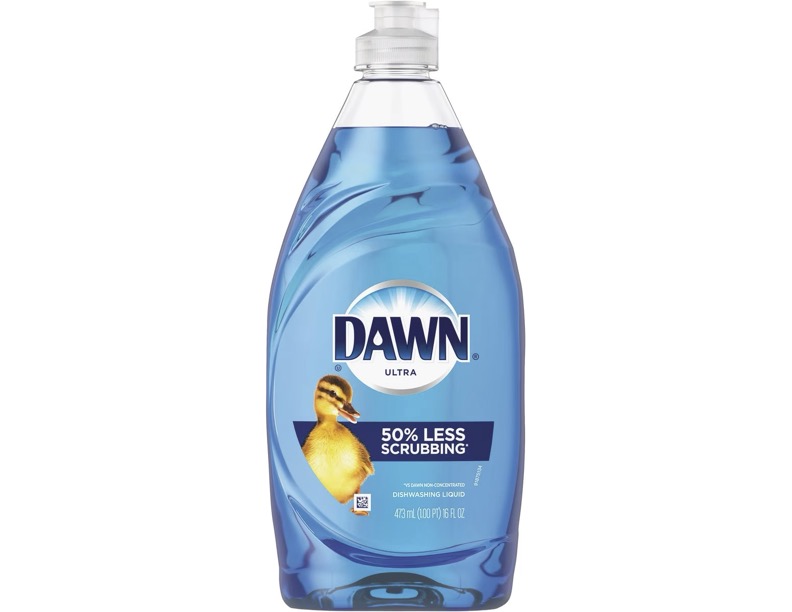
Instead, commercial kitchens rely heavily on standard detergents like Dawn, operating under the dangerous assumption that a quick rinse with water leaves a clean slate. It does not. If you actually smell a commercially washed utensil, you will detect a faint, lingering chemical fragrance. Because animal fat acts like a sponge for volatile organic compounds, that residue transfers instantly onto pre-sliced meat, tainting the food with a faint, soapy taste. Most people do not notice it because they lack refined senses or simply assume industrial cleaning agents are benign, but for anyone running a clean system, it is an obvious and unacceptable violation.
A typical bottle of Dawn is a cocktail of petroleum-derived synthetic surfactants and chemical additives, including methylisothiazolinone, sodium lauryl sulfate, sodium laureth sulfate, lauramine oxide, phenoxyethanol, synthetic colorants like CI 42090 (Blue 1) and CI 19140 (Yellow 5), alongside proprietary synthetic fragrance compounds containing phthalates. These compounds are engineered to cling to surfaces and break down grease molecularly, meaning microscopic chemical films remain trapped on porous metal and cutting edges long after the rinse water stops.
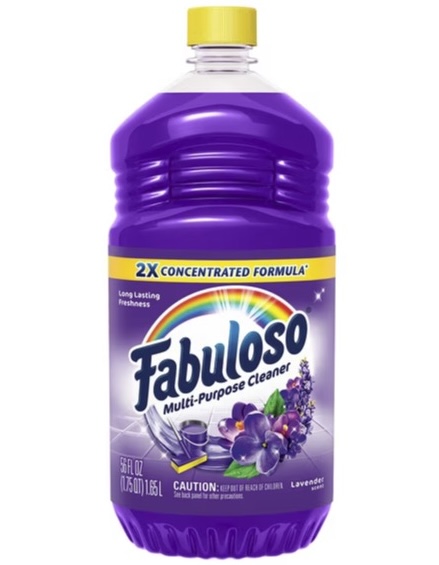
Then we get Fabuloso—chemical warfare in a purple bottle. It uses heavy-duty synthetic quaternary ammonium compounds (such as alkyl dimethyl benzyl ammonium chloride) combined with aggressive artificial fragrance cocktails that aerosolize and coat the air, clinging to everything, including your palate and your nostrils. It doesn’t actually clean the air or sanitize the environment; it dominates it with a blinding, headache-inducing chemical stink that screams cheap institutional masking rather than true hygiene. It’s like spraying perfume all over you or your house and thinking that’s hygiene.
Exposing your body to these circulating petrochemicals—whether ingested via contaminated meat or inhaled off moped floors and wiped counters—carries real physiological consequences. These synthetic surfactants, quaternary ammonium compounds, and phthalates act as endocrine disruptors, mimicking hormones, interfering with cellular signaling, and placing an unnecessary toxic burden on your liver and endocrine system. True cleanliness does not require artificial scents or industrial petrochemical residues; if you can taste or smell the cleaning product on your food or in the air, you are simply ingesting poison disguised as hygiene.
The Myth of Cleaning Legacy: “My Grandmother Used It, So It’s Fine“
When you’re in a crunch, you grab what’s available, but pre-sliced meat at smaller roadside spots or ethnic markets is a gamble. At big-name supermarkets, the large-scale sanitation standards usually keep things neutral, but at smaller independent spots, you run right into a wall of institutional negligence. They use heavy-duty cleaners on their slicers, cutting boards, and counters, and they operate under the dangerous assumption that a quick rinse with water leaves a clean slate. It doesn’t.
The main culprit is standard commercial dish soap like Dawn, loaded with petroleum-derived synthetic surfactants and chemical additives like methylisothiazolinone, sodium lauryl sulfate, lauramine oxide, phenoxyethanol, synthetic colorants, and proprietary fragrance compounds containing phthalates. These compounds are engineered to cling to surfaces, meaning microscopic chemical films remain trapped on porous metal and cutting edges long after the rinse water stops. Because animal fat acts like a sponge for volatile organic compounds, that residue transfers instantly onto pre-sliced meat, tainting the food with a faint, soapy taste. People don’t notice it because they lack refined senses or simply assume industrial cleaning agents are benign, but when you run a clean system, it’s an obvious and unacceptable violation.
Compounding this is the institutional plague of Fabuloso—chemical warfare in a purple bottle. It uses heavy-duty synthetic quaternary ammonium compounds combined with aggressive artificial fragrance cocktails that aerosolize and coat the air, clinging to everything, including your palate and your nostrils. It doesn’t actually clean the air or sanitize the environment; it dominates it with a blinding, headache-inducing chemical stink that screams cheap institutional masking rather than true hygiene.
When you try to address this with people, you run straight into a wall of cultural inertia. If you point out that these chemicals leave residues, disrupt your endocrine system, and taint food, you get pushed back with defensive nonsense like, “My grandmother always used Fabuloso. It’s a great product; don’t question it.” People confuse sensory assault with sanitation. Corporations aggressively marketed these heavily fragranced chemical concoctions to working-class and immigrant communities for decades, tying an overwhelming artificial smell directly to the concept of deep cleanliness.
They take a critique of toxic industrial chemistry as an attack on their upbringing or their grandmother’s methods. But I don’t care what your grandmother, nana,or abuela used—there is better technology and safer standards available now. Clinging to toxic legacy habits just because it’s what people have always done is how commercial chemical companies keep poisoning people under the guise of household chores. If you can taste or smell the cleaning product on your food or in the air, you are simply ingesting poison.
The Solution: Total Sovereignty Over Your Plate and Environment
I’m not saying Dawn and Fabuloso need to shut down their company gates, go bankrupt, and disappear tomorrow. What I am saying is that they urgently need to reformulate their products—or at the very least, offer truly clean, clear, unscented, and dye-free chemical alternatives that don’t leave toxic petroleum films behind. But waiting around for mega-corporations to do the right thing is a fool’s errand. The real solution requires a three-pronged approach to take back complete control of your biology:
- Never Buy Pre-Sliced or Pre-Cooked Meat: The ultimate takeaway is to bypass pre-sliced deli meats and pre-packaged proteins entirely. When you buy convenience, you are buying whatever chemical residue was left on the slicer, the counter, or the packaging equipment. Always buy whole cuts of meat and butcher, prep, and cook them yourself on your own cast iron.
- Enforce Strict Kitchen Standards: For commercial kitchens and food service operations, the baseline protocol needs an absolute overhaul. They must stop relying on heavy-duty petrochemical detergents and start using clear, unscented, residue-free soap. More importantly, rinsing isn’t enough—kitchen staff need to be trained on the reality of chemical cross-contamination so they understand that a poorly rinsed spatula or grill surface taints the entire batch of food that touches it.
- Reject the Chemical Assault at Home: Purge the artificial fragrances, the purple bottles, and the toxic legacy cleaning habits from your space. True cleanliness is the absence of chemical residue and artificial scent, not a headache-inducing cloud of quaternary ammonium compounds.
When you control your own ingredients, cook your own food on your own terms, and refuse to compromise your senses for convenience, you cut the poison out of the equation entirely.


Leave a Reply